Cart 0


The Miracle of the Discovery (1717)
The story of Our Lady of Aparecida dates back to 1717, in the Paraíba do Sul River, in the Captaincy of São Paulo (current state of São Paulo).
The Context: The governor of the Captaincy of São Paulo, Count of Assumar, was on his way to Vila Rica. Local fishermen, Filipe Pedroso, João Alves, and Domingos Garcia, were tasked with catching fish for the banquet, despite it not being fishing season.
The Find: After several hours of no success, they cast their nets and, instead of fish, caught the body of an image of Our Lady in terracotta. When they cast the net again, they found the head of the image.
The Miracle: After joining the two parts and cleaning the image, the three fishermen cast their nets a third time and caught a surprising and abundant quantity of fish. This event was interpreted as the first miracle of Our Lady of Aparecida, who gave them not only material food but the spiritual food of faith.
The Symbolism of the Image
The small image (about 40 cm high) possesses powerful symbolism that resonates with the history of Brazil:
Black Color: The most striking characteristic of the image is its dark or black color. It is believed that this color is the result of the long period the image remained submerged in the muddy river waters. Its meaning transcended mere erosion, becoming a powerful symbol of:
Inclusion: It represents the acceptance and blessing of all peoples and races that form the Brazilian nation, especially the black and indigenous populations, who were marginalized at the time.
Humility: The fact that it was found in the mud of the river by humble fishermen reinforces the idea that God manifests in the simplest places and people.
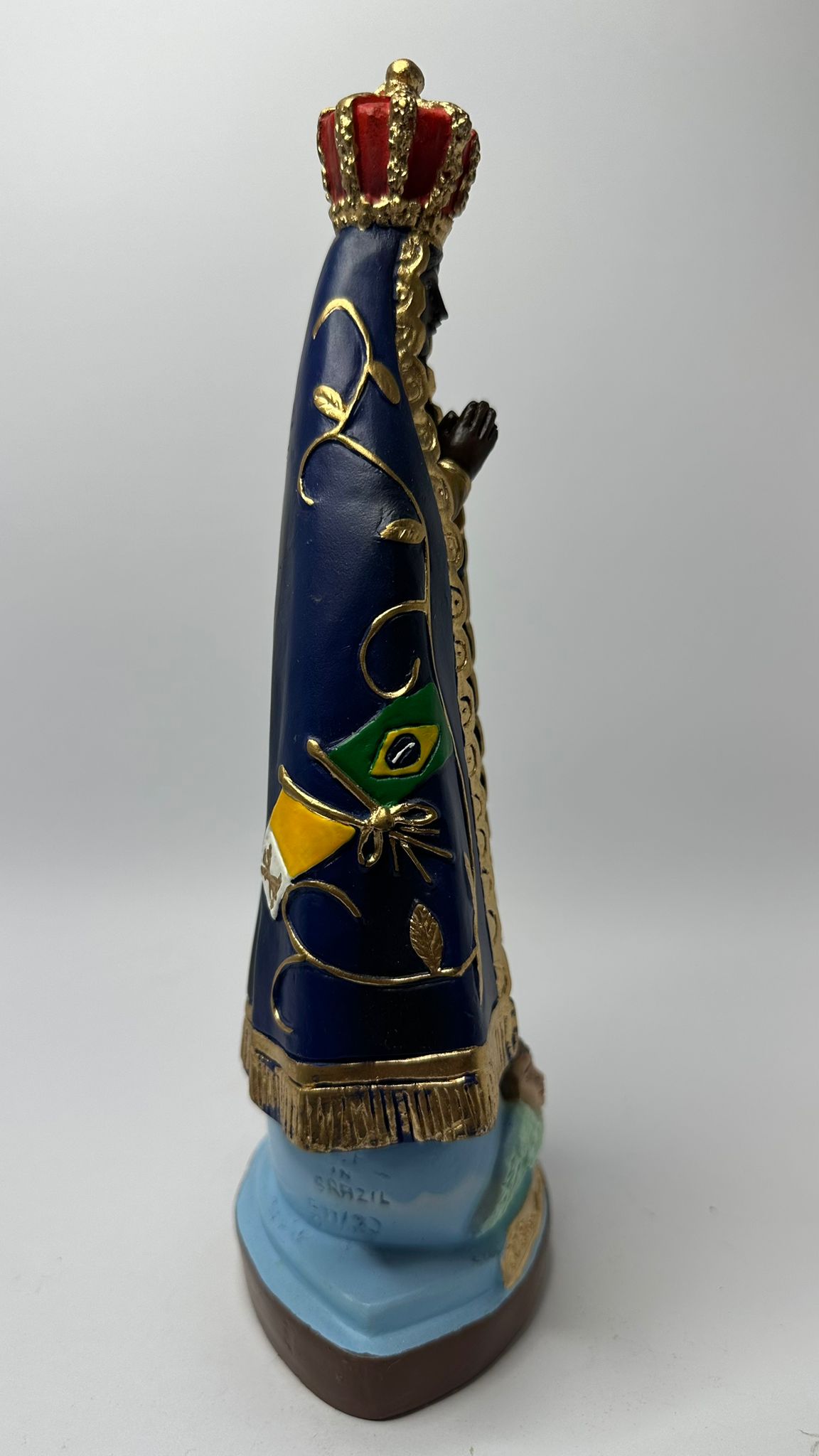
Mantle and Crown: In modern representations, the image is adorned with an embroidered mantle and a crown, symbols of her royalty as the Queen of Brazil. The mantle traditionally displays the colors blue and white, and the stars of the Southern Cross.
Conceição (Conception): The full name is Our Lady of the Conception of Aparecida, referring to her Immaculate Conception (having been conceived without original sin).