Cart 0
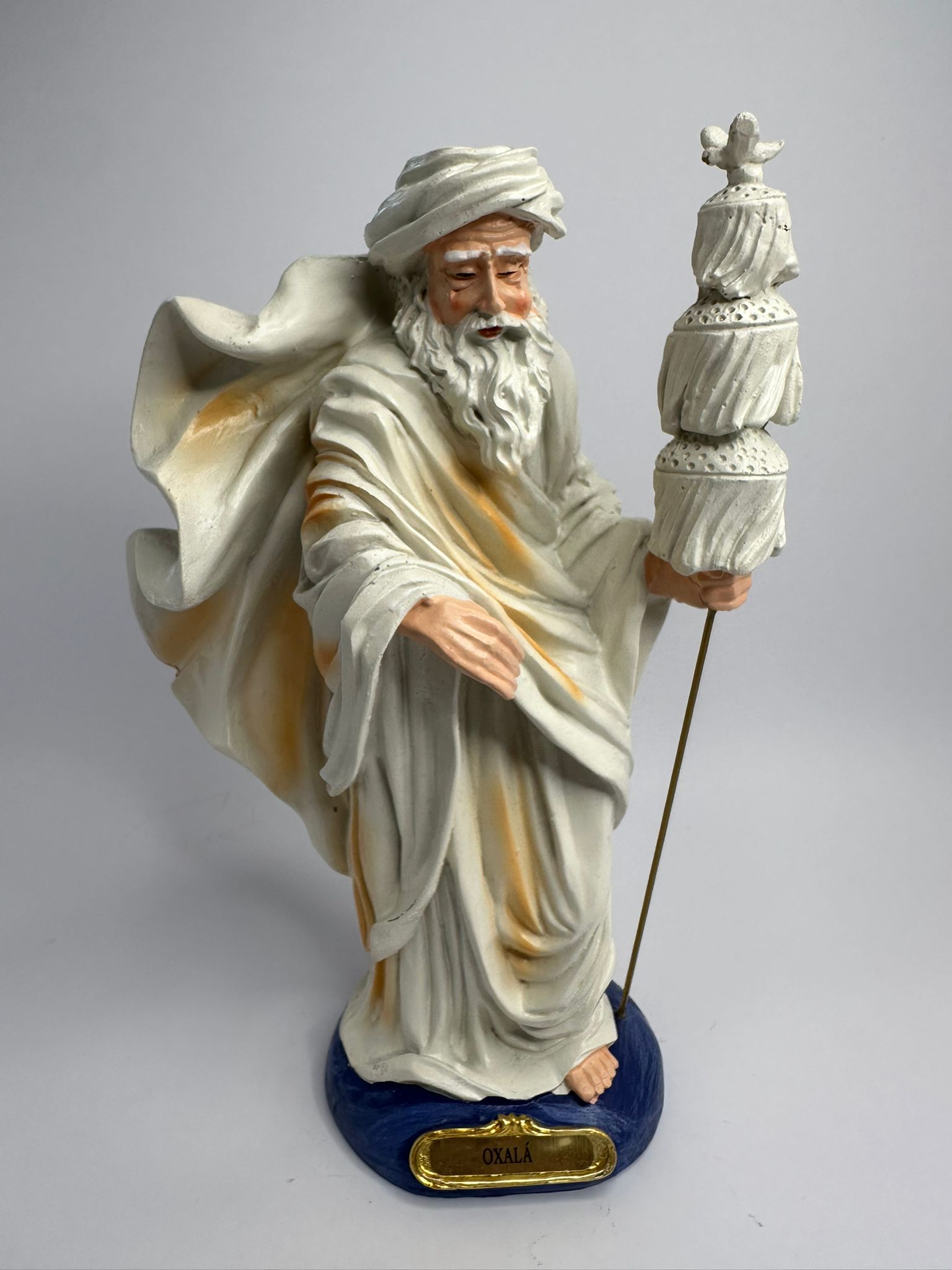
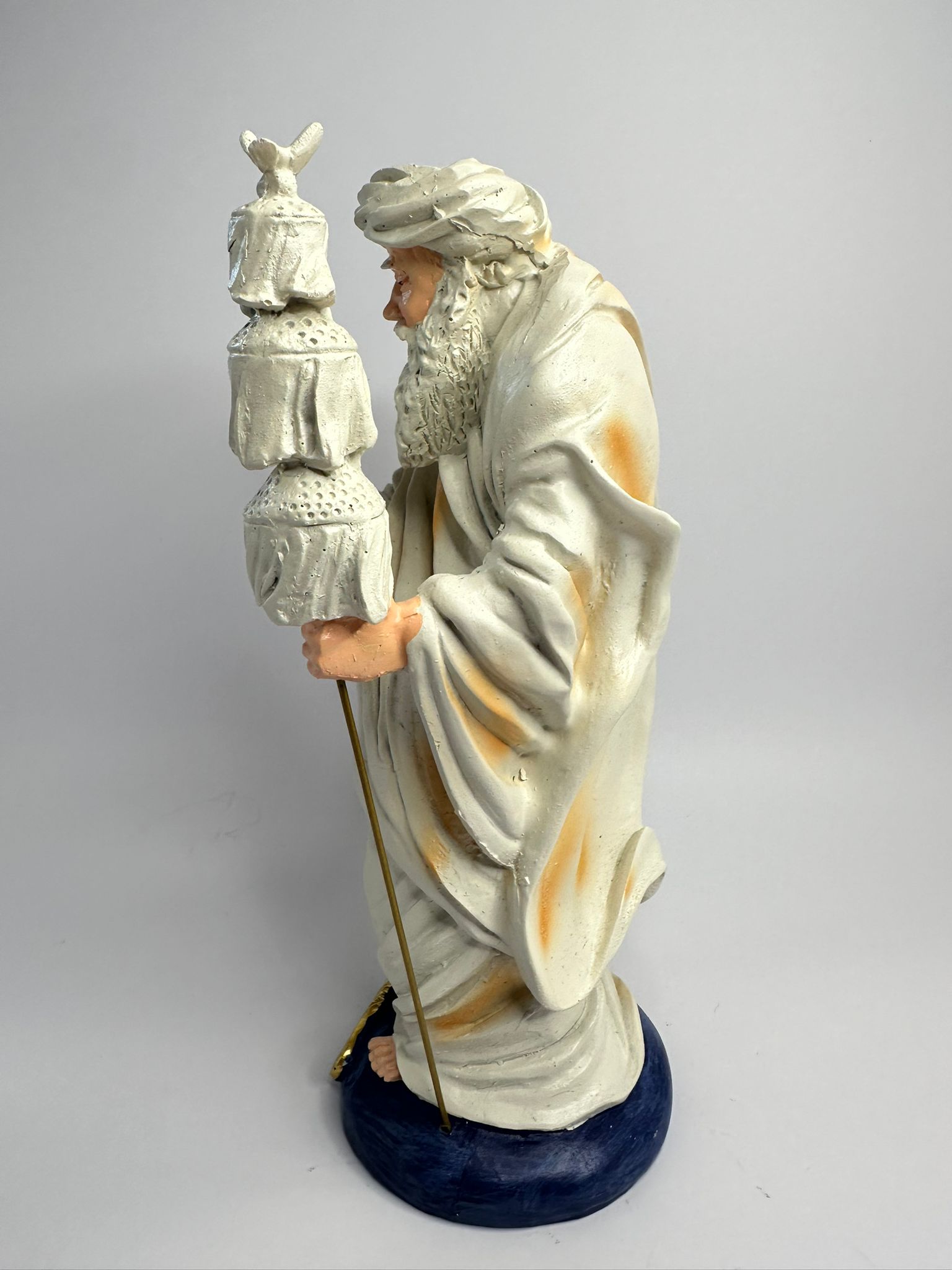
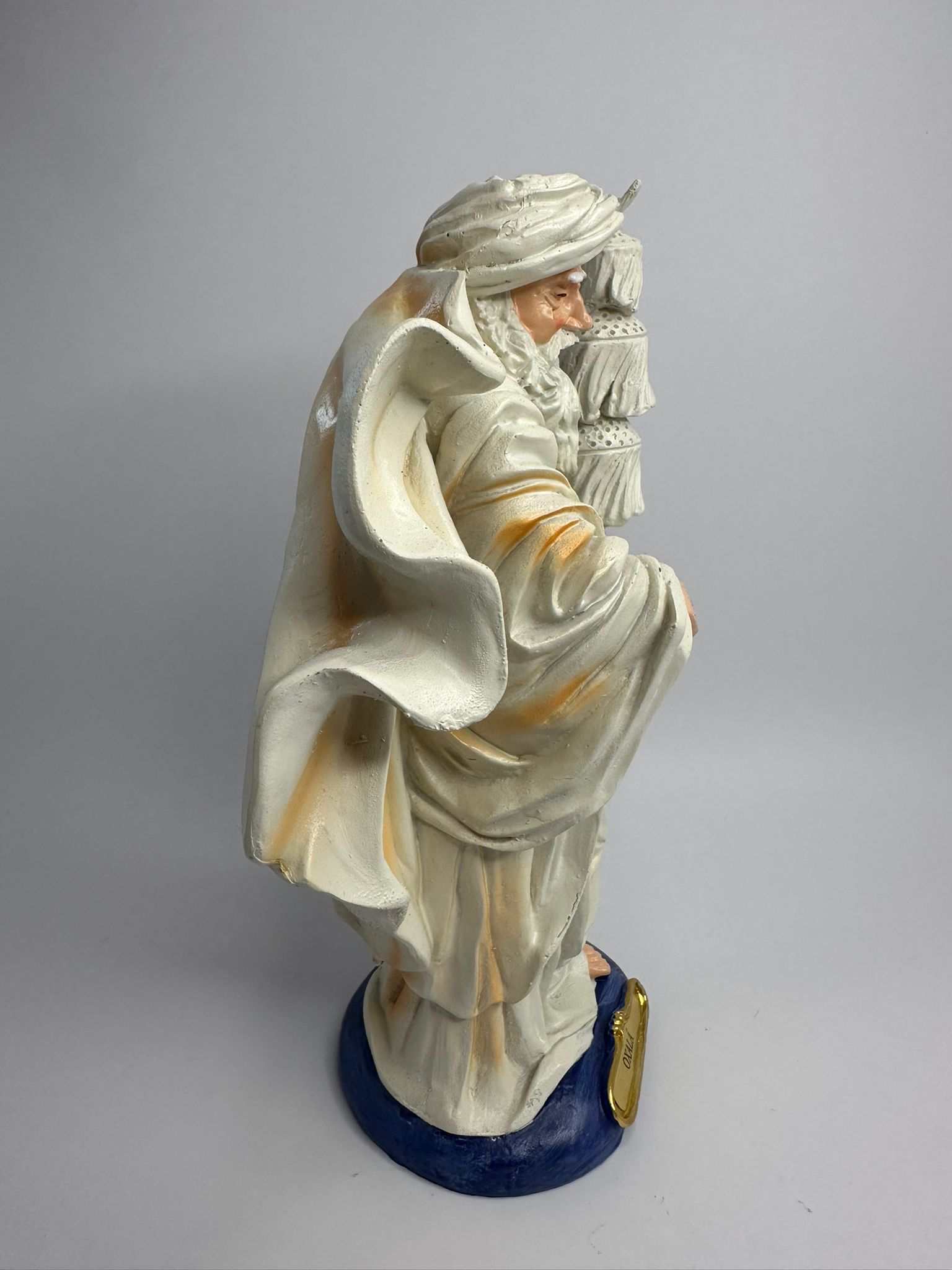
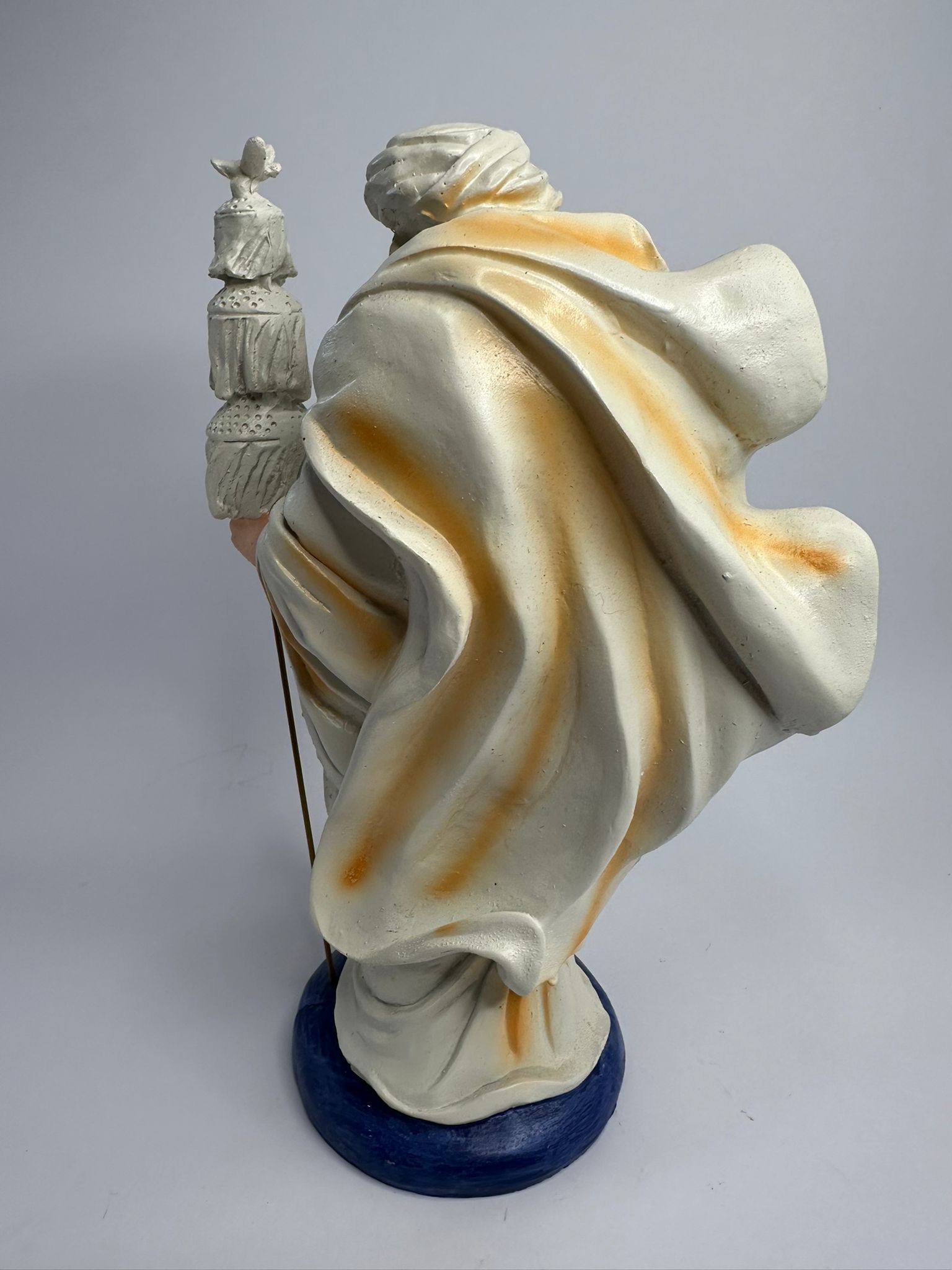
Visual Elements and Key Symbolism
The figure of Oxalá is marked by profound simplicity and purity, utilizing white as the dominant color, which is fundamental to his worship:
Patriarchal and Serene Figure:
Aspects: Oxalá is frequently represented in two aspects:
Oxalufã (the Elder): Symbol of wisdom, experience, and patience. He is portrayed stooped (due to age), conveying great serenity and resignation.
Oxaguiã (the Younger): Symbol of strength, movement, and the warrior. He is more active, but always enveloped in white, representing the purity of new ideas.
Expression: A face of profound calm, serenity, and kindness, reflecting the supreme peace he governs.
Colors and Attire:
Absolute White: White is the exclusive color of Oxalá, symbolizing creation, purity, peace, the absence of conflict, and the totality of light. His garments are long, covering the body (the pano da costa), reflecting his antiquity and his elevation.
Details: His adornments (generally bracelets and necklaces) are silver or metallic and simple, so as not to detract attention from the white.
Instruments and Symbols of Power:
Opaxorô: This is his ceremonial scepter or staff, one of the most important symbols. It represents authority, stability, the creation of time, and the power to support the world. In Umbanda, the Opaxorô symbolizes the command of his hierarchy.
White Dove: A dove frequently appears in his hand or on his shoulder, symbolizing peace, air (the breath of life), and the holy spirit or creative aether.
Crown: He may wear a simple and elegant crown, denoting his royalty and supremacy.
Aura and Environment:
Light and Air: The figure is bathed in white or silver light, suggesting the purity of the air and the gentle warmth of creation.
Nature: Elements of mountains, mist, or high places may be in the background, indicating his elevated position.