Cart 0
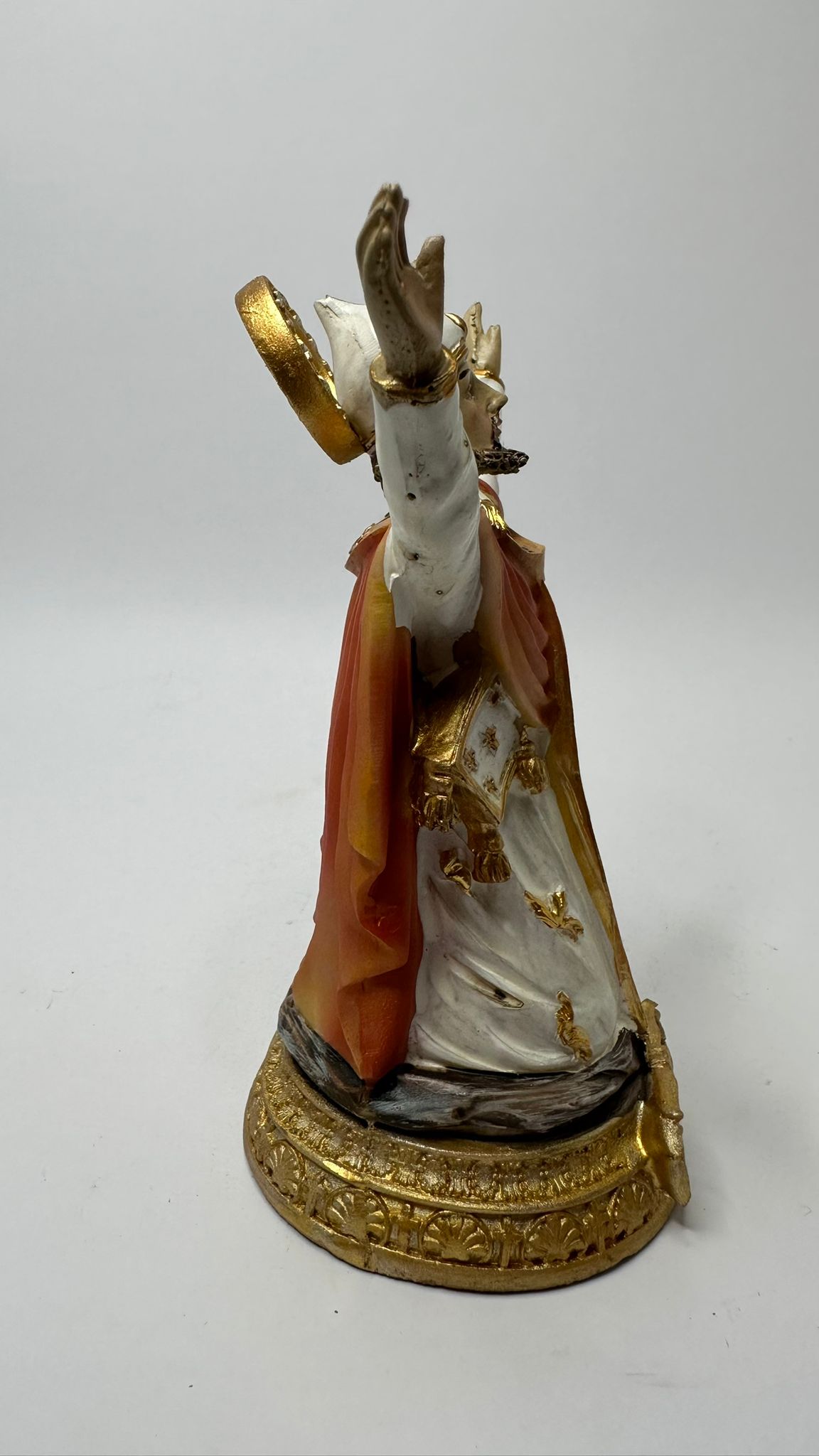
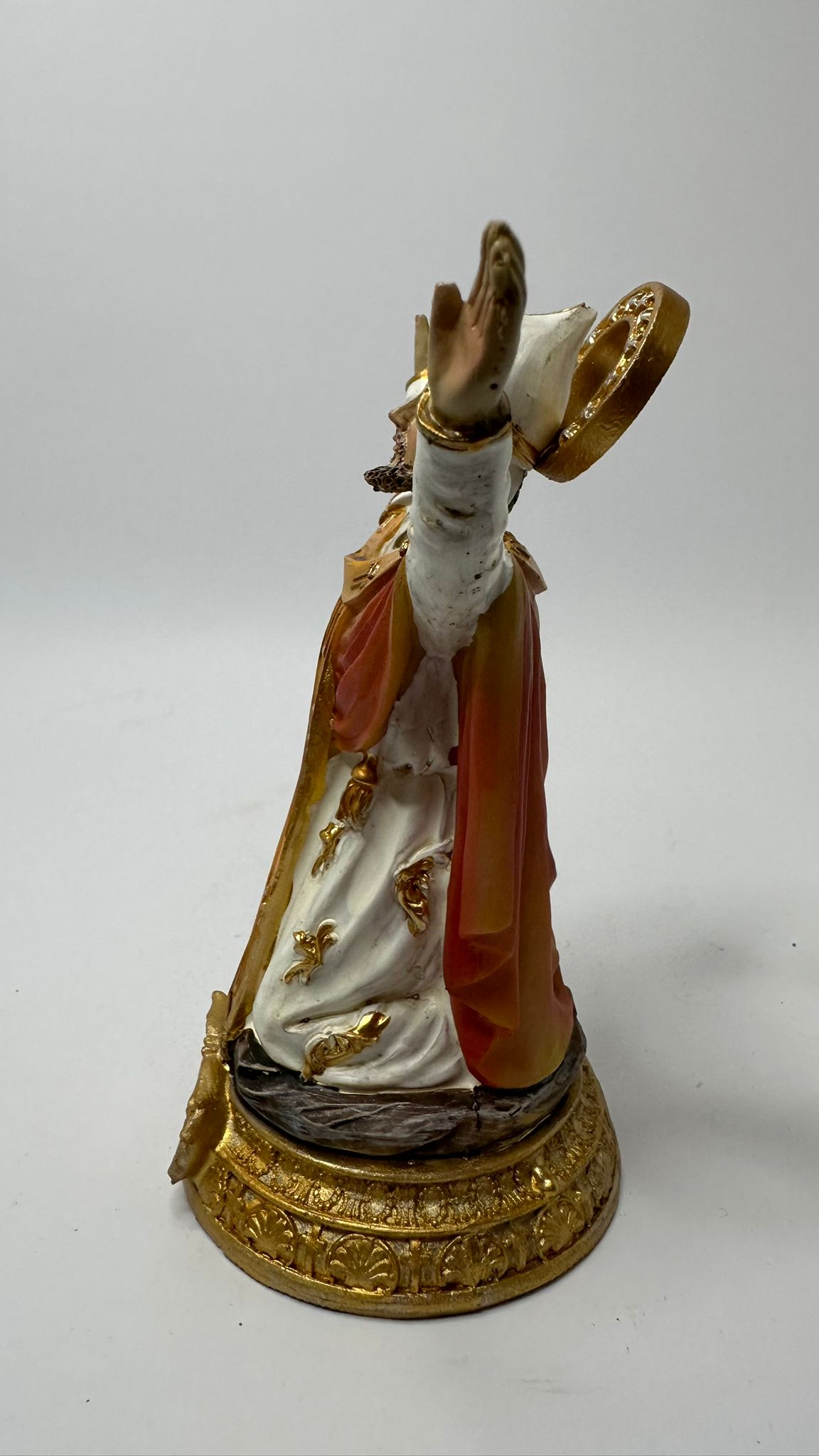
The Story Behind the Image
Saint Cyprian was a philosopher and, according to legend, a powerful sorcerer in Antioch, Syria (3rd century A.D.). His story is the core of his iconography and power:
The Sorcerer: Cyprian was famous for his knowledge of the occult arts, black magic, and astrology. He was sought out by a young pagan named Aglaïs, who wished to win over a young Christian woman named Justina.
The Power of Faith: Cyprian used all his magical resources to try to subdue Justina, but she resisted all spells and demonic invocations with prayer and the Sign of the Cross. After being repeatedly defeated by Justina’s faith, Cyprian realized that the power of Christ was superior to all his magic.
The Conversion and Martyrdom: Cyprian publicly burned all his books of sorcery, converted to Christianity, and later became a bishop. He and Justina were arrested and martyred during the persecution of Emperor Diocletian.
Typical Iconography (In the Catholic Church)
In Catholic representations, the focus is on his life of faith and martyrdom:
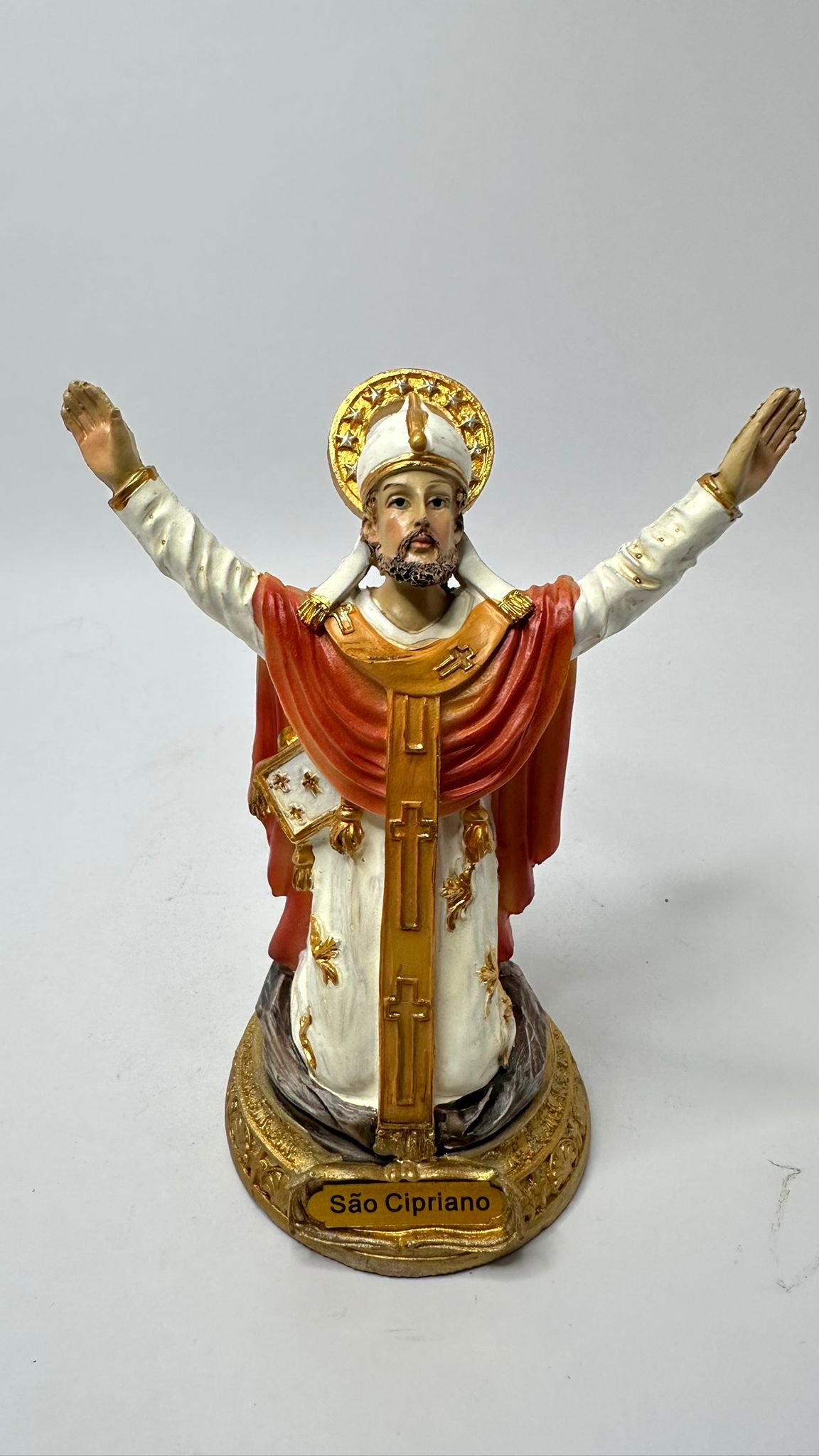
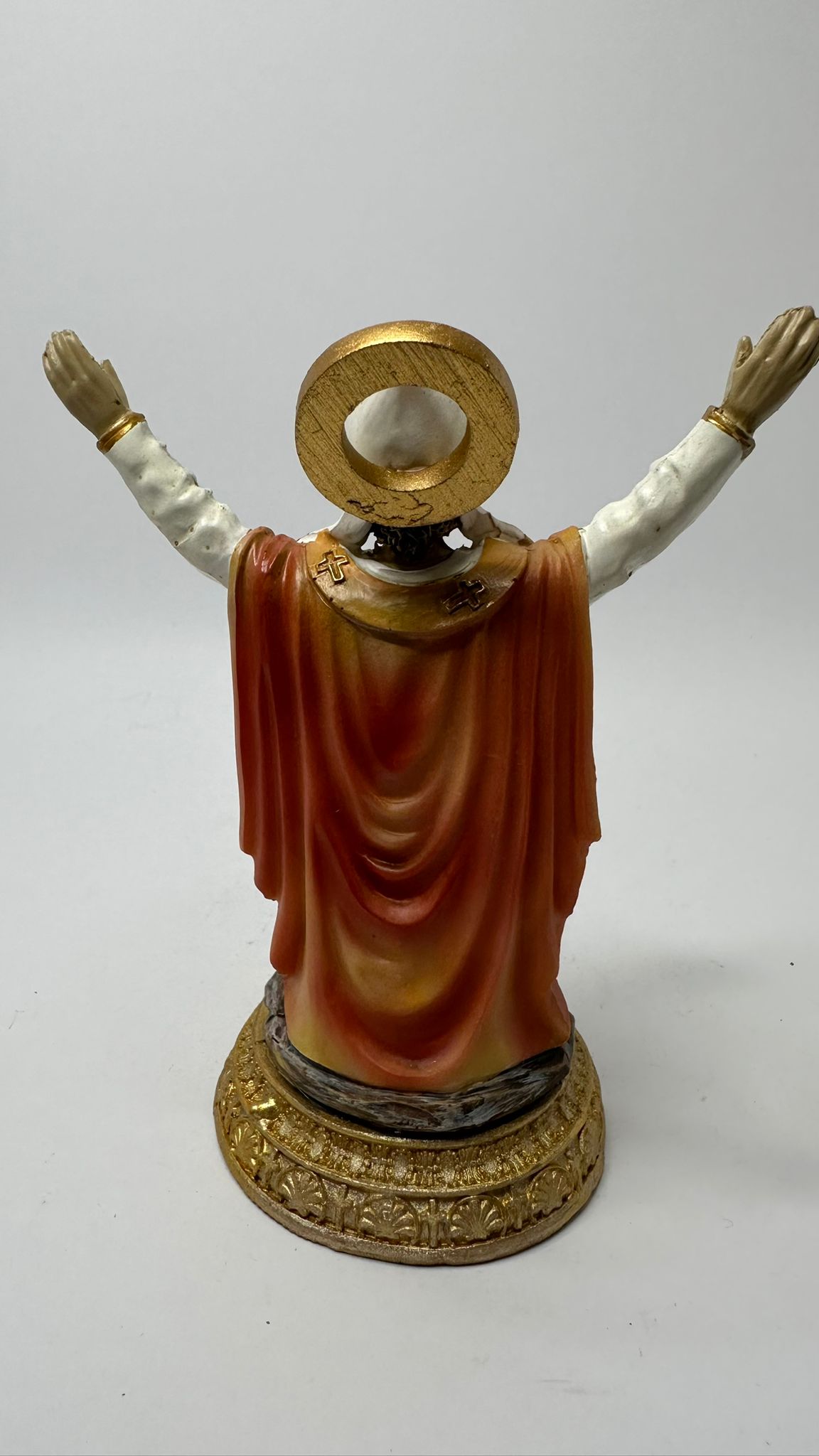
Episcopal Vestments: Cyprian is often portrayed wearing the mitre (bishop’s hat) and holding the crozier (staff), symbolizing his leadership and ecclesiastical authority after his conversion.
Palm of Martyrdom: He holds the palm, the traditional symbol of a martyr’s victory.
The Cross: Occasionally, he holds a Cross or points to it, symbolizing his conversion and the source of power that defeated his magic.