Cart 0

The Mythical and Spiritual Meaning
The name Rudraksha derives from two words in Sanskrit:
Rudra: One of the Vedic names for Lord Shiva.
Aksha: Means tear or eye.
According to legend, Lord Shiva meditated deeply on the welfare of humanity, and when he opened his eyes, tears of compassion and love fell onto the Earth, crystallizing into the Rudraksha seeds. For this reason, the Rudraksha is known as “The Tears of Shiva.”
The Unique Attributes of Rudraksha
The Rudraksha is celebrated for its unique bioelectric properties, which help balance the nervous system of the human body:
Protection and Shield: The energy of Rudraksha creates a powerful protective shield against negative energies, evil spirits, and external influences. Continuous use is believed to ward off fear and bring a sense of security.
Health and Vitality: It possesses electromagnetic properties that help stabilize the heart, blood pressure, and reduce stress and anxiety. It is seen as a natural calming agent that promotes longevity.
Focus and Meditation: The seed increases the power of concentration and mental clarity, deepening the meditative state and facilitating the spiritual progress of the practitioner.
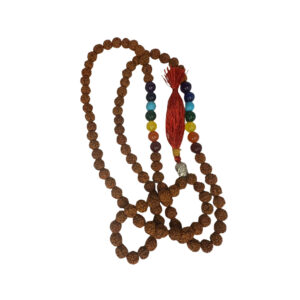
Mantra Power: The Rudraksha is the preferred Japamala for the repetition of the mantra dedicated to Shiva, Om Namah Shivaya, but it can be used for any Japa practice (mantra repetition).
The Concept of Mukhi (Faces)
Rudraksha seeds are classified by the number of Mukhi (natural faces or grooves) they possess, and each Mukhi is linked to a different meaning and deity (the most common are 5 Mukhis, associated with Shiva). A traditional Japamala typically uses seeds of the same Mukhi for all 108 beads.