Cart 0
History and Function
The tradition of the domestic oratory dates back centuries and is linked to the way faith was practiced outside of churches:
Centuries of Tradition: The Oratory became popular starting in the Middle Ages but reached its peak during the 18th and 19th centuries. At the time, distances between homes and churches were great, and many rural families depended on these private altars to keep their spiritual life active.
“God Within the Home”: The oratory established a spiritual focal point in the home, ensuring that the sacred was always present in the family’s daily life. It served as a space for refuge and for teaching the faith to younger generations.
Wood as Material: The choice of wood (cedar, pine, jacaranda, etc.) was not just a matter of availability, but also of symbolism. Wood refers to nature, durability, and the Cross of Christ, lending the structure a solid and sacred character.
Typical Elements of the Wooden Oratory
Although the form varies greatly (from small wall boxes to large cabinets), the basic structure and internal elements are consistent:
The Structure:
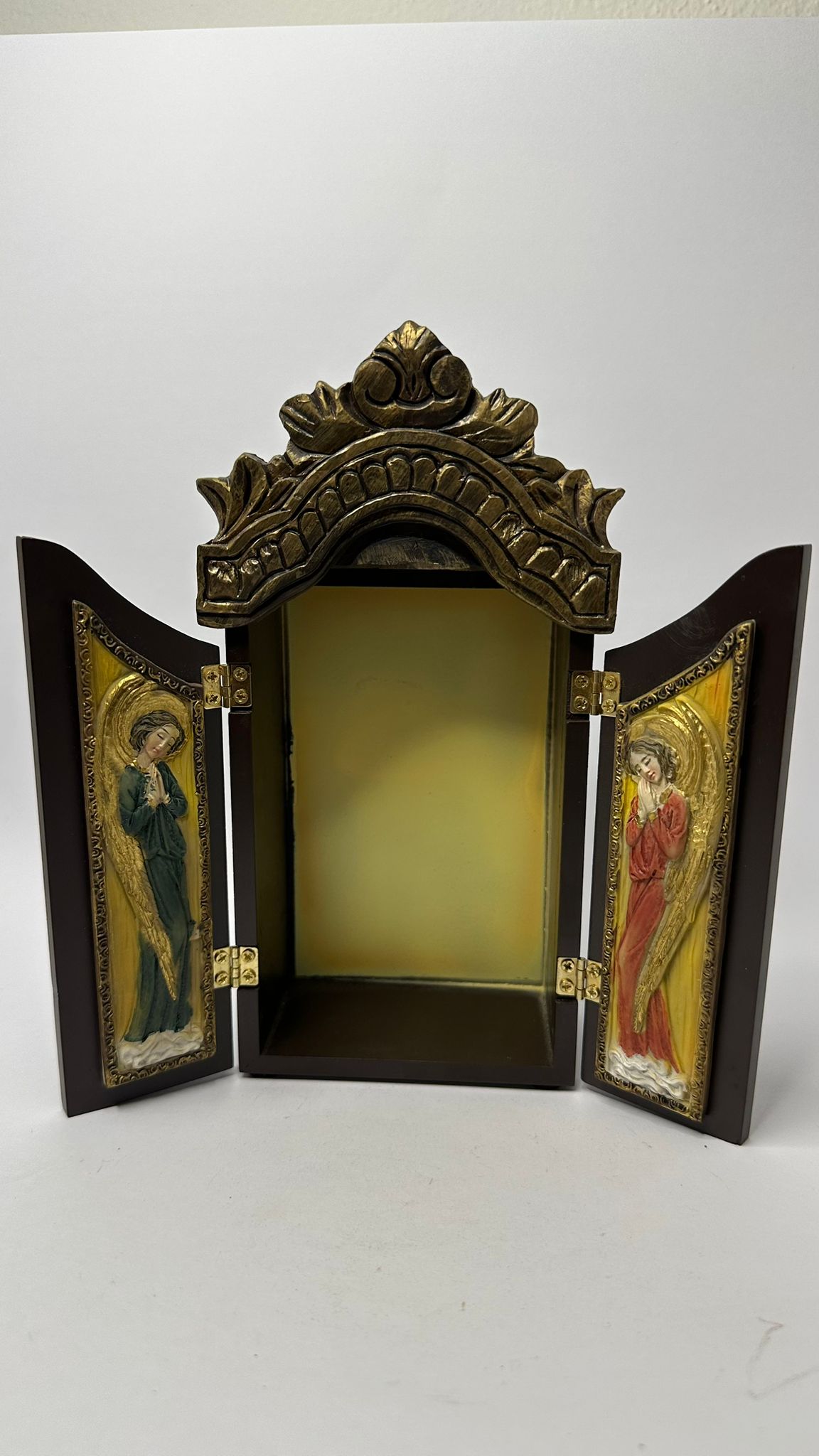
Niches or Shelves: Designed to house the sacred images (saints of family devotion, Crucified Jesus, Our Lady).
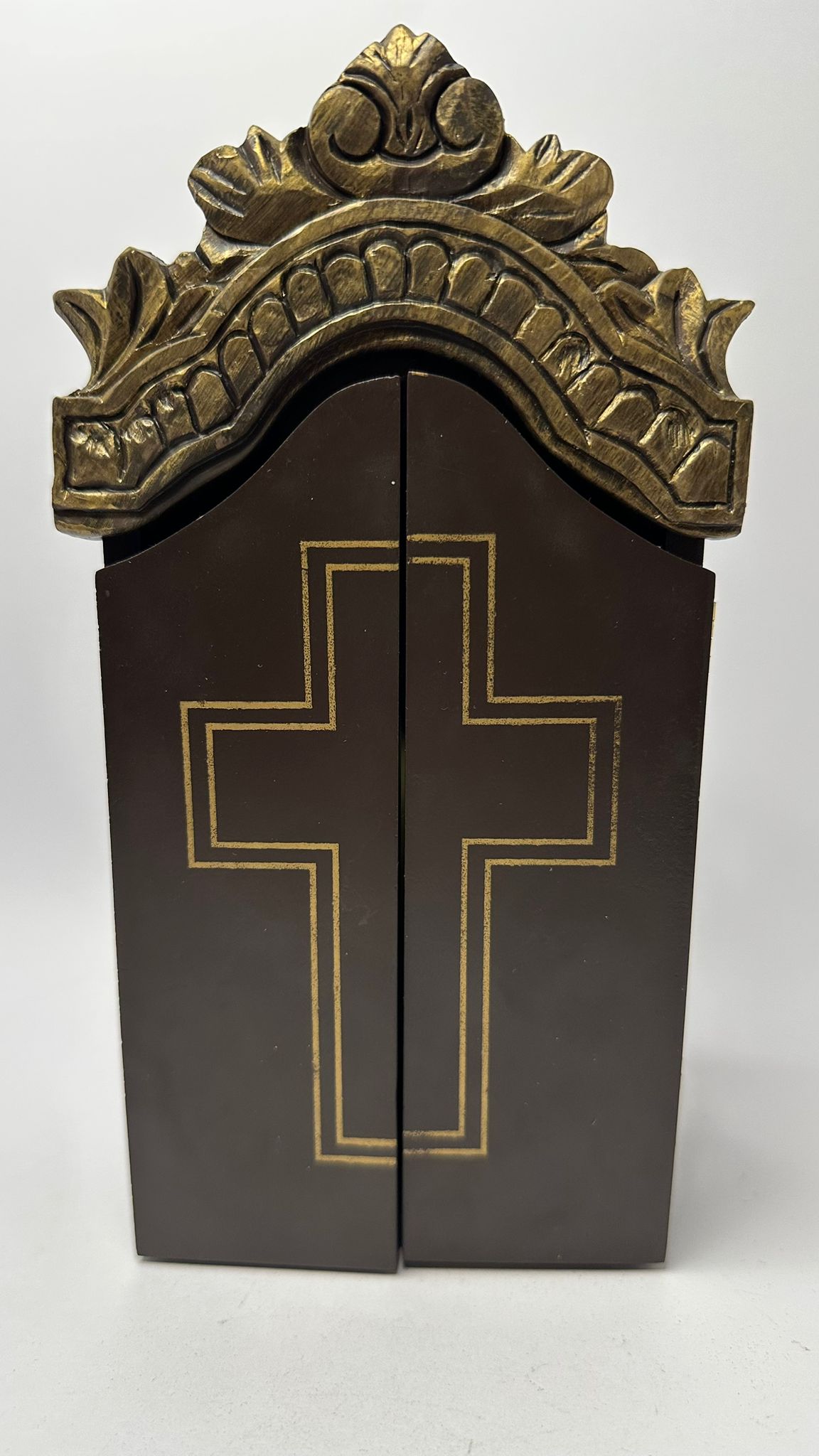
Doors (Optional): Many oratories have doors that, when closed, protect the images from dust and light, and when opened, reveal their sacred contents, symbolizing the opening to the divine.
The Contents (The “Guard”):
Images of Devotion: Typically, it contains the image of Our Lady (such as the Conception or the Rosary) and the most important saints for the family (Saint Anthony, Saint Joseph, etc.).
Candles and Oil Lamps: Used to illuminate the altar during prayers, symbolizing the Light of Christ and the fire of faith.
Reliquaries and Rosaries: Objects of personal devotion, such as rosary beads and small relics, are kept in the oratory.
Holy Water and Herbs: In some popular traditions, the oratory may also keep elements for blessings (benzimento), such as holy water or sprigs of rue and rosemary.